Showing posts with label China. Show all posts

Thursday, February 12, 2015

15 Unforgettable UNESCO Heritage Sites

Often, I have been asked what my dream job would be. Being able to travel the world discovering beautiful places wouldn't a bad gig.  However, I'm not talking about being a travel writer, but working for UNESCO, the United Nations Educational, Scientific, and Cultural Organization. 

UNESCO is a specialized agency of the United Nations (UN) that promotes international collaboration through education, science, and culture in order to further fundamental human rights, justice and freedom all over the world.  As part of this effort, UNESCO catalogs and preserves sites of outstanding importance, either cultural or natural, to the common heritage of humankind with the purpose of bringing awareness of their significance to the world. 

Each year, nations that choose to participate may nominate sites to be added to the list, and listed properties must meet at least one of 10 criteria like representing a "masterpiece of human creative genius," or that it is an area of "exceptional natural beauty." However, when you visit any one of these 936 locations, it becomes exceedingly apparent why they are considered of value to humanity.

I had the pleasure of visiting and seeing quite a few UNESCO Heritage Sites around the world, and here are some of the most unforgettable places.

There are three things I remember distinctly about my trip to Cambodia: the overwhelming heat, the temples, and the ever-present aftermath of Khmer Rouge.

I knew so little about Cambodia prior to my trip, and even now, after visiting and seeing most of the significant sites, I’m still uncertain as if I have grasped the enormity of the atrocities the Cambodian people were subjected to for nearly three decades.

There are two faces to Cambodia: one shiny and happy, the other dark and complex, but such is the yin and yang of Cambodia, a country that inspires and confines.

It’s hard to overlook the magnitude of People’s Republic of China, a country where over 1.3 billion people reside, almost 130 different languages are spoken (excluding dialects or sub-dialects), and where there are more than 55 ethnic groups.

China has always intrigued me, and it has been on my bucket list of travel for as long as I could remember. The Forbidden City, the Great Wall of China, and of course, Tienanmen Square, where the 1989 protests took place, the image a man standing in front of a column of tanks forever etched in my mind. It was an epic travel experience that I'd always dreamt of.

So, when Beijing was chosen as the site of the 2008 Olympics, I knew I had to make my pilgrimage to this land of one of the world’s earliest and greatest ancient civilizations.

Historic Monuments of Ancient Nara (Japan)
Japan is known as the "Land of the Rising Sun", but for me, it will forever be the land of the most spectacular sunset. It’s also a place where I’d spent one of the most tranquil and peaceful New Year’s Eve.


No country embodies a wonderful diversity in landscape, culture and people of Southeast Asia like Malaysia, and it has everything that one can hope for in vacation destination, a great mixture of cultures, history, people and some of the most delicious food I've had in SE Asia!

Malaysian cuisine is as diverse as its people, and the mélange of Chinese, Malay and Indian and even German (Café Edelweiss) dishes I had in Georgetown were some of the best I’ve had in the world.

Of course, no trip to Malaysia would be complete without visiting Melaka, a charming little town about 3 hours north of Singapore.

My favorite part of Malaysia, however, was the warmth of its people, and there are only few countries in which I have traveled where I was treated with such remarkable hospitality, kindness, and generosity (S. Korea & Turkey being the other). I've found the Malaysian people to be genuine in their approach to foreign visitors, another fine byproduct of the underdeveloped tourism industry, and unlike other countries in SE Asia where the majority of tourists tends to be Westerners, in Malaysia, most of the vacationers and tourists were Malaysians, which I really appreciated and enjoyed.

Overall, our 3 weeks in Malaysia was an absolutely unforgettable experience ... one we hope to repeat someday soon!
Seoul is FABULOUS! Over the past three decades, I have witnessed my homeland transform itself from the rubble of the Korean War to become an economic powerhouse not only in Asia but worldwide, and no city in South Korea epitomizes and reflects this transition like its capital, Seoul. From the concrete jungles of the 80’s and 90’s to the softer-edged 21st century urban oasis that it has become since the new millennium, largely thanks to its visionary Mayor, Seoul is not only one of the most interesting and exciting cities in Asia but also the most tourist-friendly.

Seoul is a cosmopolitan city that equals, and in some respects, surpasses the likes of other megapolis in the world like New York City and Tokyo. Everywhere you look, there’s a reflection of prosperity that has been built from sheer determination and dedication of its citizens. From the upscale high-rises in Gangnam district to the chic boutiques in Apgujeong; or the rows galleries filled with fine art in Samcheongdong district to the regal omnipresence of Gyeongbokgung, Seoul is a sophisticated traveler’s dream come true.

Great thing about Seoul is that, like NYC, another favorite city of mine, it’s ever-changing and ever-evolving, and every time I return to the city, I’m reminded that the best is yet to come.
Sometimes, traveling is more about people than places, and I fell in love with Istanbul long before I arrived in Turkey. I was first introduced to the warmth and the generosity of the Turkish people while living in Frankfurt, Germany, also known as “little Istanbul”.

From market vendors to restaurateurs, classmates to language teachers, the vibrancy and kindness I had experienced from almost every Turkish immigrant I’d encountered was a welcoming contrast to the austerity and aloofness of the local Germans.

I’d always heard from travelers returning from Turkey that you arrive in Turkey as a guest and leave as a friend, and my experience in Istanbul was no different. Everywhere I went, I was overwhelmed by the hospitality of just about everyone I’d come across.

Needless to say, I had a wonderful time in Istanbul, an amazing city full of extraordinary history and culture, breathtaking scenery, and excellent cuisine. So, teşekkür ederim ... thank you Istanbul for an unforgettable trip.

Salzburg (Austria)
The hills may not be alive with the sound of music, but Salzburg, in my opinion is the most beautiful town in Austria.  Despite the inaccuracy of the Von Trapp family’s escape route, this birthplace of Wolfgang Amadeus Mozart boasts itself as being the Golden City of High Baroque, which becomes self-evident as soon as you step into its Altstadt.

Being in Salzburg is like being in a fairytale.  Standing beside the fast-flowing Salzach River, the Altstadt’s mosaic of graceful domes and spires, the formidable cliff-top fortress and the mountains beyond will enchant you even before you get to the old town.  Everywhere you go, you’re overwhelmed by the breathtaking scenery, the skyline, and the history.

The best time to visit Salzburg is during Christmas, when the tradition and the festivities of the holiday highlight its beauty.  You’ll be charmed by the wonderful Christmas Market on the Cathedral Square, the traditional stalls, the stars overhead and the quality of the products, and enchanted by traditional craftsmanship, delicious Christmas cookies, aromatic tree ornaments and many arts and crafts of the season.  It’s definitely an experience that you should not miss.

Bruges, Venice of the North as it’s called, is a city straight out of a fairytale with its picturesque medieval architecture and gorgeous landscape reminiscent of the works of Flemish masters – and one my favorite little cities in Europe.

My first trip to Prague was when Europe was experiencing one of the coldest winters in almost a century. Although I was used to the cold winters in NYC, I never felt the kind of wind chills and frosty conditions that I'd faced in Europe. It was absolutely brutal and so cold that even my teeth hurt.

Despite the syberian weather, I was determined to travel and experience places in Europe that I’d always dreamt of. Prague had been on my travel bucket list for some time, and I wasn’t going to pass up the opportunity.

Being there in the winter, it seemed that my husband and I had the whole city to ourselves. We strolled through the empty streets, admiring the dream-like scenery, stopped at little cafés straight out of Tolstoy novels, and as we crossed Charles Bridge, I felt as if we’ve been transported to another time and place. It was beauty beyond my imagination, and its alluring skyline left me breathless.

Not surprisingly, there are over 30 UNESCO Heritage Sites in France, and as a self-proclaimed Francophile, I’ve spent the past decade traveling and discovering everyone one of them. From the picture perfect country sides of Alsace to the magnificent beaches of Dune de Pyla, I love all the wonders that the country has to offer: breathtaking scenery, charming villages and towns, spectacular beaches (mostly the western coast and not the proverbial Cote d’Azur) and mountains, the divine selection of wine, the scrumptious cuisine … and the list goes on and on.
Arles
Carcassonne
Mont Saint Michel
Pont du Gard
Saint-Emilion
Strasbourg
Tuscany (Toscana) in the Northwestern region of Italy is one of the most popular tourist destinations in Europe. That’s perhaps the reason why my husband and I've had our doubts about visiting Tuscany for awhile. However, considering that it is possibly the greatest repository of art in the world, and home to world class wine and cuisine, we could no longer resist the temptation of visiting these beautiful parts of Italy.

It would be hard to find a more idyllic town in Europe than Bern (Berne).

I'd visited Berne during my first trip to Switzerland, and when the train pulled into the central station, I thought I was looking a mirage.  I had to get off the train to see whether the picture perfect town outside my window wasn't a figment of my imagination.

What a beautiful city it turned out to be! A city that I’ve never even heard of until I opened my guidebook. Having arrived in the city at sunrise, I strolled through the quiet and empty streets alone, feeling as if I was walking through pages in a fairytale. Then, just as the cafes and markets were opening, I found a quaint little cafe at the edge of the Nydeggbrucke (Nydegg Bridge) near the Bear Pit.

I must say, it was a dream-like experience, and although I’ve visited Bern several times after moving to Europe, the first time was the best, and the most unforgettable.
Quito & Cuenca (Ecuador)
Traveling is like falling in love. Although I can’t put into words what it is about a place that I’m drawn to, I know it and feel it as soon as I find it, and as soon as I landed in Ecuador, I was captivated!

Sitting on the equator between Colombia and Peru, Ecuador may be one of the smallest and less-known countries in South America, but it’s packed with the most startling contrasts of scenery.

Everywhere we went, we were surrounded by breathtaking scenery, think majestic mountains of Switzerland alongside the tranquil beauty of the Greek Isles. The eye-catching colors of Ecuador leap out from every corner of its diverse landscape.

Although the country’s greatest draw are the Galápagos Islands, the rest of Ecuador shouldn’t be seen merely as a stopover. Thanks to its compact size, traveling around Ecuador is easy, and this friendly and vibrant country truly is a microcosm of South America. For me, Ecuador was a wonderful introduction to the continent that I hope to see and discover more of in the future.

My first introduction to Mexico was no different than for millions of American college students. My best friend and I’d decided we wanted to get in on the beloved tradition of going to Cancun during spring break - a rite of passage so to speak, and boy, did we get exactly what we were looking for, plenty of partying and sun.

But even through the haze of all the partying and sun, what I remember most about Mexico was the enchantment of seeing and experiencing a culture that was none like I’d ever known. Whether you’re soaking up the sun on the breathtakingly beautiful white sand beach or marveling at the wondrous Mayan ruins of Chichén Itzá; dancing the night away at a trendy high-energy night club in Cabo or enjoying one of its delectable traditional dishes, which has been deemed also as an Intangible Cultural Heritage of Humanity by UNESCO, Mexico is adept at satisfying everything we look for as travelers.

French poet André Breton famously called Mexico the surrealist country par excellence, and every time I’m in Mexico, I’m reminded that what is ordinary there is truly extraordinary.

Grand Canyon, Yosemite National Park, Taos Pueblo, Carlsbad Cavern National Park (The U.S.) 
"America's national parks are a treasure house of nature's superlatives – 84 million acres of the most stunning landscapes anyone has ever seen. They became the last refuge for magnificent species of animals that otherwise would have vanished forever; today, they remain a refuge for human beings seeking to replenish their spirit." - PBS, The National Parks


Friday, March 15, 2013

Culture Shock

Even as an avid traveler, I’ve experienced many moments of culture shock, when I feel thrown off by unfamiliar customs, habits and cultural values of the places I’m visiting.  No matter how much I’ve traveled, how many different places I’ve been to, or how broad-minded I consider myself to be, from time to time, I still feel like a fish out of water.

Most traveler I’ve spoken to while traveling or back at home have expressed the same, as taking on the world’s customs can jumble a traveler’s brain even more than crisscrossing the international date line.  Realization of stark contrast in culture as well as blunders are inevitable, even for the well-meaning.

However, when you’re visiting a foreign country or living in one, it’s normal and natural to experience things that you don’t understand … or that is difficult for you to comprehend, but in overcoming these experiences, I’ve learned that what’s important is not that I’ve experienced culture shock, but that these experiences have allowed me gain a better understanding of the culture and its people.

So, without further ado, here are 10 most notable experiences I’ve had and valuable life lessons I’ve learned.

1. speak up and be your own advocate in the US

Being raised in a traditional Korean family, I was discouraged from any type of self-promotion or any act that would draw attention to myself.  Especially as a child, you are encouraged by your parents to listen and not be heard.  So, imagine my surprise when I walked into my first classroom in the US and saw children asking questions, and the teachers encouraging students to express their thoughts and opinions.

Expressing ourselves, our thoughts, opinions and especially, our accomplishments are what people are encouraged to do in the US from early on in life.  Children are taught to present themselves with confidence, and those who are (or become) successful at accomplishing what they desire  in school as well as in the workplace are not necessarily the students with the best grades but those who can best present themselves.

This concept of self-promotion is difficult to understand for most foreigners and immigrants in the US.  My mother would say, “self-boast is ungodly,” and talking about yourself and your achievements is déclassé.  However, what my mother failed to understand was that presenting yourself in a positive light is the norm in the US, and talking about one’s accomplishments is not necessarily boasting.  In order to get into the schools you want or obtain and advance in jobs that you desire, you must speak up and be your own advocate.

2. a smile not just a smile in France

Travelers who have been to France often say that the French are impolite and rude, but I disagree.  Being one of the most popular places on Earth, Paris is often the only place that most tourists get to see and experience in France; hence, Parisians the only impression that people have of the French.  However, in order to experience true French hospitality, you must venture outside the “City of Light”.

Over the years I’ve traveled to many places in France, and I must admit, I’ve rarely experienced the kind of brusque and rudeness that I have experienced in Paris.  However, with the exception of few unpleasant incidences, notably, a receptionist at a hotel who kept my husband and I waiting for an hour while he looked up our “supposedly lost” reservation when we arrived at midnight after a 5 hour drive from Germany, I wouldn’t say that the lack of hospitality in Paris is no worse than what I’ve experienced in other parts of Europe.   

However, on the contrast to Paris and perhaps a few popular tourist destinations in France like the Loire Valley and Provence in the month of August, I have experienced nothing but kindness, generosity and graciousness from the French people, and even if your ability to speak French is limited to “bonjour”, most often, just the mere smile on your face will bring about the most heartwarming reception from the locals.

Almost everywhere I’ve traveled to in France, I’ve encountered wonderful hospitality, so much so that I don’t even bother to look up restaurants in guidebooks or ask for recommendations anymore.  As years of experience has taught me, even without a reservation, you can expect extraordinary food as well as hospitality no matter where you end up.

The only thing to be cautious about is that sometimes a smile can be misconstrued.  Especially when you’re trying to resolve a serious matter like a disputing a bill at hotels and restaurants, trying to find lost items (a purse or a wallet), or trying to resolve an issue at an airport or at a post office, whether out of frustration or embarrassment, a smile can be interpreted as lack of seriousness on your part to resolve the matter or worse that you’re being dishonest about what you’re saying.  In most cases, a smile will get you a lot further than tipping, but remember to stay stern when resolving a problem.

3. enjoy a cup of coffee or a glass of beer for hours in Germany

While living in Europe, I’ve often heard that Germany is the “black hole of service” meaning service and hospitality is completely absent there.  However, unlike the rudeness and the odious attitude that Parisians are associated with, the lack of service and hospitality in Germany is due to the fact that the concept of "serving" a customer does not exist in German culture.

Once wait staff bring you your food in Germany, you will not see them again, unless you call them specifically.  They will not come by the table to refill your drinks unless called upon to do so, and the check will not arrive at your table unless you ask for it.

It’s the cultural norm that in most restaurants, the server and the wait staff will take your order, bring you your food, and you will not see them again until the end of meal when you’re ready to pay.  Then, once your bill arrives, they will simply ask, “How did it taste?”  However, this is merely a rhetorical question, as they have no interest in your opinion of the food you just ate or have any intention of resolving the matter if there was anything wrong with it.  It’s an equivalent of Americans greeting each other with “How are you?”  You are simply expected to say, “fine, thank you.” and be on your way.  

I must admit, while living in Germany, the lack of service not only at restaurants but overall in the so-called service industry (shops, hotels, travel, etc.) really bothered me.  It was difficult getting used to having to track down a wait staff every time I needed something or wanted to order additional items on the menu.  Especially after growing up in America where I was told and made to feel that “The customer is king.”, I had a hard time getting used to being treated like a second class citizen while paying for it.

However, somewhere along my stay, I realized that there's an upside to being completely neglected by the wait staff.  As a patron, you are left to enjoy your meal, and to sit as long as you like.  There’s no pressure sale, obligation to finish your meal quickly so that they could turn the table, or even to tip (hence, the reversal culture shock of having to fork up additional 15-20% of the bill for Germans who visit the US).

You can sit for hours engrossed in conversations with a cup of coffee or a glass of beer, and no one will bother you or make you feel unwelcome.  The locals refer to this as, “German Gemütlichkeit”, and the best part of is that whether you’ve just eaten a meal fit for a king or milked a cup of latte for 3 hours, the wait staff will come to the table with the same banal look on their face and ask, “Hat es Ihnen gut geschmeckt?” to which I always reply, “gut, danke.”

4. go from 0 to 140mph in 10 seconds in Germany

There something that every driver in Germany intrinsically knows but will never admit to, the hierarchy of the road.  From bottom up: VW, BMW, Mercedes, and the ultimate king of the German road, Porsche.

The traffic rules and laws in Germany are as strict as they come; so much so that in order to obtain a driver’s license, you must complete a course that resembles PhD studies and pay around $1,500, which is more than the tuition at some German universities, at an authorized school even before attempting the written and practical test.  There are about gazillion signs you have to memorize, and some that makes no sense at all (to most foreigners that is).

So, it’s no wonder that once they get behind the wheel of a moving vehicle, most Germans will drive like a bat out of hell, and driving on German Autobahn … or just being a passenger for that matter requires nerves of steel.  Only until I started to drive in Germany, I realized the necessity of being able to go from 0 to 100mph in 10 seconds.  Most Autobahn (highways) in Germany are comprised of only 2-3 lanes, and the entrance to the highway is much shorter (about 1/3 to be exact) than in the US.  So, in order to have any chance of getting into the highway, you must literally go from 50km/h (about 30mph) city limit to 240km/h (about 150mph) in 10 seconds.

However, I must admit, once I got used to it … or shall I say, once I got over the petrified feeling of being run over by cars going 150mph, I begin to enjoy the drive, the exhilaration of being able to drive without speed limit, and as Germans would say, "Fahrvergnügen".  So much so that when I returned to the States, moving at 55mph seemed so blasé.

5. enjoy the silence during meals in Germany

I remember my first meal with my German colleagues in Frankfurt.  It was a week after my company had transferred me to Germany, and I was invited by coworkers for lunch.

Mind you, having lunch with coworkers who were either visiting or transferred was a normal protocol at the company I was working for at the time, but I was nervous about meeting my new colleagues, as knowing so little about the German culture, I had no idea what to expect.  Luckily, most of the people I’d met were friendly and nice, and as everyone was introducing themselves, I became excited about the prospect of working with my new coworkers.

However, once the food arrived, deafening and uncomfortable (at least for me that is) hush fell over the entire table.  No one spoke or said a word, so much so that I could actually hear the cooks preparing the meal in the kitchen.  All I heard was the sound of utensils hitting (ever so gently) the dishes as the food was being cut for consumption.

I was absolutely confused, as I could not understand how my coworkers who were engaging in witty repartee only few minutes before had all turned into Marcel Marceau.

Little did I know, not talking during a meal is quite the norm in Germany.  Even among friends and family, most Germans won’t engage in a conversation until they’re done eating or until the after dinner drinks arrive, usually wine or Schnaps.  So, when you’re invited by your German colleagues or friends for a meal, and conversation seizes when the food arrives, don’t be alarmed.  Use the time to think of witty things to say once the conversation starts up, and just enjoy the meal.

6. honesty is NOT always the best policy in Germany

“The problem with you girls is that you get pregnant.”, declared my boss, as we were sitting in a staff meeting strategizing a better process of career planning and development for the employees in Germany (and overall in Europe).  It was shortly after I’d given a presentation on introducing a software that would enable the employees to self–determine and manage their career paths.  The software as well as the new program would allow employees to take more initiative in the process, and for the HR department to better plan for replacements and manage succession planning before the position becomes vacant.

Then, out of the blue, my boss expressed his frustration of losing valuable employees due to maternity leave, and further expressed his opinion that no matter how well we plan or invest our resources on developing an efficient career planning process, we would always loose employees due to unforeseeable events.  Of course, he was referring mainly to women, and I understood what he was trying to say; however, nothing prepared me or my American colleagues, for the bluntness of the words that came out of his mouth.

Little did I know at the time, Germans are notorious for their directness, expressing themselves exactly as they see it, even proudly calling it “Ehrlichkeit” (honesty), and although I was warned by my coworkers, nothing prepared me for the bluntness I’d encountered in Germany.

While living in the US, I’ve never been a big proponent of political correctness, and I believed that actions not based on genuine intentions or understanding can do more damage than good.  However, after living in Germany, I begin to understand and appreciate even the smallest efforts and gestures that are made and must be made in the name of being politically correct, as I now believe that people should be mindful what they're saying.

Perhaps my boss (my former boss, as I no longer work for the same company) was expressing a sentiment that is shared by many male as well as female executives in Germany or Europe for that matter.  However, it was a reflection of the deep-rooted problem in German society that continues to marginalize women in the workplace.  Therefore, although the sentiment he'd express may have been a popular one at the time (or even now), it didn't make it right to voice and perpetuate such prejudice.    

Taking care in using language is a way of taking care of the world, and being politically correct has less to do with censoring individual’s actions or words but more to do with protecting those who suffer its consequences.  And sometimes, honesty is not always the best policy.

7. WEALTH is a four letter word in Europe

Sitting in German class with students from all over the world, I was always fascinated by the different perspectives that I was exposed to, but more importantly, I was enlightened by their view of America(ns).

Living in Germany during one of the most horrific international relations debacle in US history, Americans were associated with George W. Bush’s administration’s bullish unilateral decisions and global ambitions rather than our humanitarian efforts and technological innovations.  By the end of his first term, I’d become accustom to hearing disparaging remarks about the US and its leader.  However, what surprised me was how wealth was perceived in Germany … of course, Americans being associated with wealth or being wealthy.

First of all, I was shock to discover that almost everyone I met, whether from Pakistan or Spain wanted to know, “Why Americans were so rich when there was so much poverty in the world?”

Obvious, this is a gross misconception concocted by media, as a few minute drive into or outside of most American cities will remind you that indeed not all Americans live the life of rich and famous. 

However, with the misconception of all Americans being wealthy aside, I was surprised to learn how (Western) Europeans felt about wealth and how they view the wealthy.  The whole conversation came about as we were reading an article that contained the word Yuppie, which stands for "young urban professional". 

When there was question what the word meant, our German teacher explained that a yuppie was someone who was not only wealthy but was selfish and greedy in obtaining that wealth.  Furthermore, what shocked me was not only the false description of the word but the disdain in his voice with which he spoke at the mere mention of it.

I found this quite the contrast from what I’d experienced while living in NYC, where being a yuppie was an accomplishment, a status symbol to be proud of.  However, in Germany or in Western Europe for that matter, I’ve learned that most people do not trust the wealthy nor consider it to be an accomplishment of any sort (as most wealth in Europe are acquired through inheritance and not self-generated), and most Europeans would agree that it is better to be among Mitt Romney’s 47% rather than to be Mitt Romney.

This is because in most Western European countries, especially Germany and France, wealth is seen as something to be shared by everyone not a privilege horded by few (whether by 1 or 10 percent).   “Equality before public burdens.” as French president François Hollande gallantly declared before proposing the 75% income tax hike on France’s wealthiest, and unlike in the US, he has staunching support of his party as well as the majority of French people.

It’s not as bad as being sent to the guillotine, but for France’s and ultimately, Europe’s wealthiest, the message is clear … share your wealth or else! 

8. let go your personal space and enjoy strangers’ company and generosity in South Korea

One thing that most Americans have difficulties getting used while traveling abroad is the loss of personal space.  With world’s population at over 7 billion and growing, I’m surprised we’re able to maintain any personal space at all.  Nevertheless, growing up in (North) America, I’ve learned to value my, as well as others’ personal space, and when someone, especially a stranger, gets too close in a crowded subway I get really uncomfortable.

However, in Asia and in many other parts of the world, personal space is foreign concept.  The main reason is because in (North) America, we tend to emphasize and focus on the needs and rights of an individual.  On the contrary, in Asia, people tend to care more about the collective needs and rights, and there's a lot more communal and often family approach to doing things.

People in many of these countries and cultures see themselves as an intertwine component of society, and space something that’s meant to be shared by all.  Even in rapidly developing and developed nations, generations of families still live together, occupy and share the same home.  Therefore, most people in Asia are not accustomed to having personal space and do not share the same priority that (North) Americans place on having one.

Nevertheless, with all the cultural understanding aside, I must admit, not having my personal space was one of the most difficult aspect of living in South Korea, especially in subways and buses where I was constantly being pushed and shoved without any acknowledgement or an apology.

However, one day, I got on the bus in Daejeon with heavy bags of grocery.  As it was during commuting hours, I had no choice but to nudge my way in, barely finding a place to stand while balancing a grocery bag on my shoulder and holding on to another with my pinky.  Then, out of the blue, an elderly women who was sitting in front of me reached over and took the bags from my hand, and when my immediate reaction was to jerk my hand away, she merely looked at me with a kind smile and said, “Rest your bags on my lap.”

Still stunned by her generosity, I gently placed my heavy grocery bags on her lap, and even though I’d felt uncomfortable about doing so, I did not want to refuse or insult her.  It was one of the kindest act of humanity I’d experienced in my life, and once I’d learned to let go of my personal space, I began to enjoy strangers’ company and generosity.

9. have faith in humanity not in traffic lights in Vietnam

There should be a section in guidebooks for Vietnam on how to cross the road: “Relax and be self-confident, look straight ahead, don’t make eye contact with the drivers, walk slowly with purpose, and never NEVER step back.
It may sound weird to think that you need instructions to cross the street; however, once you set foot in Vietnam, especially in cities like Hanoi or Ho chi Minh City, you will understand why.  The traffic in major cities in Vietnam is INTENSE and crossing the street can be absolutely daunting!  The traffic (especially to foreign visitors) seems absolutely chaotic, and it extremely rare to find a working cross-walk.  Therefore, most people cross the street wherever and whenever they can, and with thousands (which seems like millions at times) of motorbikes and cars zipping down the road, getting to the other side of the street can seem like an Amazing Race challenge.

Surprisingly, the locals have told me, and from what I’ve witnessed personally during my stay in Vietnam, accidents are rare, and astoundingly, my husband and I were able to cross the street every time without any problem … although, our blood pressure went up by million once we got to the other side.

Everyone has their own theory on how to get through the traffic, everything from getting yourself into a Zen-like state to saying a little prayer beforehand.  However, for me, I choose to have faith in humanity and in the cyclists and drivers who seem to know what they’re doing.  And of course, NEVER ever step back.
10. bargaining is as important as tipping in China

Traveling in China, I felt as if I’d hit the mother lode of treasures.  From inexpensive memorabilia at outdoor markets to high end luxury items at Shanghai Tang, whatever your heart desires, China truly is shopper’s paradise.

Also, shopping in China can be great fun as the majority of shops and markets engage in bargaining.  Without a word, a calculator is exchanged between buyers and sellers, each party fervently typing in the price they’re willing to sell or pay for the goods.  With the exception of department stores, most street vendors and outdoor markets expect you to bargain and thus set prices 50 to 100% higher.  Therefore, you should never pay the initial asking price from any street vendor or small, privately-owned business, as bargaining is a cultural norm in China.

Bargaining is expected as tipping is in North America, and you should not feel that if you’re being cheated or feel reluctant to do so.

I remember when my husband and I’d visited the Hutongs in Shanghai and came across a market where an array of beautifully crafted traditional items were being sold.  We’d found a set of pillow cases made out of silk and asked the shop keeper for its price, and she told us they were equivalent of 10 US dollars.  It didn’t even cross our minds to start bargaining as my husband and I knew that in order to buy the same pillow cases in the US, you would have to pay more than five times the price.

However when we handed the shopper the money, she smiled uncomfortably and said, “I’ll give it to you for $5.” and gave back half of the bills.  It was clear to see that our decision not to engage in bargaining had made her feel uncomfortable; however, she was gracious and kind enough not to take an advantage of our ignorance.   

Reverse Culture Shock

Traveling the world for almost two decades has made me realized that there is so much of the world that I do not know and want to know, and even though I have experienced many cultural gaffes and shocks, I still enjoy seeing new places, experiencing different cultures, and meeting people who have different perspectives and lives.

Ironically, being back in the US, I find myself experiencing “reverse culture shock” or “re-entry shock”, as I’m seeing my own culture in a whole different light.

I am shocked by the continuing and ever-growing gap between the rich and the poor in this country.  Although I certainly do not think that the richest top 10 percent of our nation is responsible for all the greed and evil that exist in the world or is obligated to share their wealth as in Europe, I certainly believe that as a modern developed nation, we must do a better job in creating and maintaining a social infrastructure that takes care of those in need, the elderly, the children and the poor who can’t help themselves.

When my husband and I’d moved to San Francisco, one of the most shocking thing was to see the great number of homeless people on the street.  As I drove each day to downtown and saw the endless line of people looped around a homeless shelter, I couldn’t fathom how this great nation of mine could allow such human tragedy to occur and continue.  Oh, how shocked the students in my German class would be to know that not all Americans were living it up like Donald Trump.

Also, what has been even more shocking is all the violence I have seen and have read about in the US.  Every single day, when I turn on the news, there are reports of murder or gun related deaths, and in the past year, there has been a mass shooting somewhere in this country almost every monthMy political views aside, as a person who has lived abroad in places where gun ownership is better controlled and monitored, I must admit, the ownership of guns in the US has become out of control and incomprehensible.  So much so that I actually felt safer in the jungles of Cambodia where there are still warning signs for landmines than in the US.  

I’m certain that most people living outside of North America have difficulties understanding our need to preserve and protect gun ownership, and I must admit, I too am having a hard time grasping it.

Monday, November 19, 2012

Magnificent China

One of the first words my 4-year old had learned to read was “China”.  He’d picked up a pot that he was banging on as a part of a mother-son musical duo, and read out the phrase, “Made in China”. 

It’s hard to overlook the magnitude of People’s Republic of China, a country where over 1.3 billion people reside, almost 130 different languages are spoken (excluding dialects or sub-dialects), and where there are more than 55 ethnic groups. 

China has always intrigued me, and it has been on my bucket list of travel for as long as I could remember.  The Forbidden City, the Great Wall of China, and of course, Tiananmen Square, where the 1989 protests took place, the image a man standing in front of a column of tanks forever etched in my mind.  It was an epic travel experience that I'd always dreamt of. 

So, when Beijing was chosen as the site of the 2008 Olympics, I knew I had to make my pilgrimage to this land of one of the world’s earliest and greatest ancient civilizations.  

Shanghai
As soon as my husband and I’d landed in Shanghai, we knew that we were in for THE travel experience of a lifetime.

I was told that Shanghai was known as Paris of the East.  In my opinion, it should be the other way around, Paris is Shanghai of the West.  Shanghai is absolutely spectacular!  It is without a doubt the world’s boomtown, the quintessential symbol of China’s superpower status, and as the breathtaking view of the Bund will clearly demonstrate, Shanghai is a metropolis of the future.  

the Bund
Yuyuan Garden
beautiful streets near Yuyuan Garden
Qibao (Old Street)
What to do:
In addition to all the "must see" historical sites and museums, I really liked Nanjing Road and People’s Square (Ren Min Guang Chang), which truly is an urban park that features manicured greenery and the architecturally impressive Shanghai Museum. Also, as People’s Square is one of the busiest area in Shanghai, and perhaps in the world, it's an ideal place for people watching.  The area near the Yuyuan Garden and the Huaihai Road is absolutely charming, and don't miss the luxury goods store  Shanghai Tang, where the impeccable craftsmanship of the cloths and merchandise will give “made in China” a whole new meaning.

Where to stay: Central Hotel, Fairmont Peace Hotel, Langham Yangtze, Peninsula Hotel, Ramada, Westin

Beijing
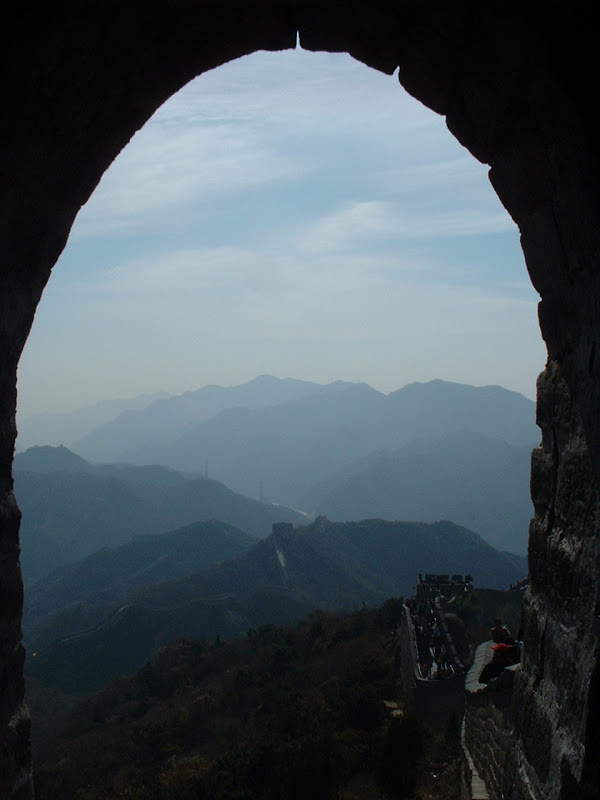
Beijing truly is a walking history book.  From the grandeur of the Forbidden City to the hutongs which reflect the everyday lives of ancient Beijing, everywhere we went, I felt as if I’ve been transported to a different time … a different century.  The only thing that brought me back to reality, and inevitably to 21st century, was hordes of tourists that surrounded me at all times. 

the Great Wall
ever-so-serene landscape
Summer Palace
Lama Temple
Forbidden City
Ming's Tomb Sacred Way

Where to eat:
the seafood restaurants near Holiday Inn, Qianmen Quanjude Roast Duck Restaurant (32 Qian Men Street), Dadong Roast Duck, Lao She Tea House (3 Qian Men Avenue West)


Hong Kong
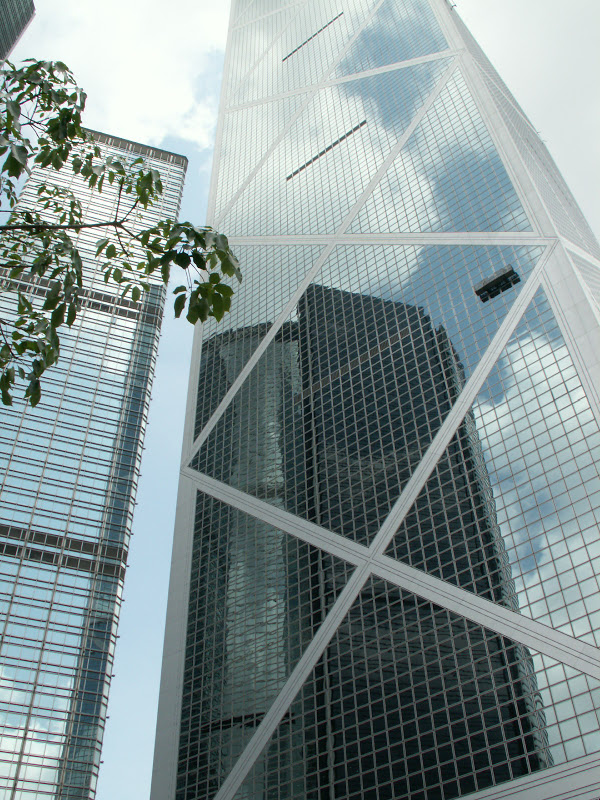
Unfortunately, our experience in Hong Kong was quite the opposite from the experiences we had in Shanghai and Beijing.  It’s a place that has all of the disadvantages of being a big city: the crowd, the pollution, the noise and the inflated prices, but sadly, with none of the advantages … and even worse, very little history.  Fortunately, my husband and I were able to meet up with a good friend of ours, and we ended up having a great time. 
What to do:
  • the tram rides – the cheapest and the most fun way to get around (2HKD)
  • the ferry ride to Kowloon – same as the tram experience but on water (2.2HKD)
  • D’Aguilar Street – mainly comprised of restaurants and bars for expats but nevertheless fun
  • Wu Kong Shanghai – a great restaurant on the corner of Nathan & Peking Road
Where to sleep: definitely in Kowloon, Holiday Inn & Sheraton are good options.