Showing posts with label Frankfurt. Show all posts

Sunday, February 23, 2014

Museums of Germany

Porsche, Oktoberfest, bratwurst, and fairytale castles – these are some of the things that come into mind when we think of Germany.  However, what is less-known but more significant is that Germany is home to some of the best museums in the world.

Hailed as the cultural capital of Europe, Berlin was one of Europe’s most influential economic, cultural and political center since it's origins as a trading post in the 13th century, and at the turn of century, Berlin enjoyed a period of unprecedented prosperity and creativity.  


However, after WWI, the German economy collapsed, and as Hitler and the Nazi party came into power, Germany became the center of one of the most infamous regimes in history, and remained so until 1945.

Sadly, during this period, much of Germany’s arts and culture were annihilated.  All modern style of art were considered as degenerate and were banned or confiscated.  The only type of art that was promoted were paintings and sculptures that promoted extreme patriotism and nationalism.


It has taken almost half a century for Germany to shed its torrid past, and after the fall of the Berlin Wall, Germany has once again reestablished itself as the cultural capital of Europe.  Liberal and socially progressive atmosphere has helped to attract artists of various venues from all over the world, and Germany has once again become one of the top cultural destination.

Berlin 
The Museum Island/Mitte:
In Moabit:
  • Hamburger Bahnhof (Invalidenstr. 50) Museum of the Present, with exhibits of contemporary art
Near the Sony Center:
In Friedrichshain:
  • East Side Gallery
In Kreuzberg:
In Charlottenburg:
In Dahlem:
Museum Ludwig  
Roy Lichtenstein's M-Maybe, Andy Warhol's Brillo Boxes and George Segal's Restaurant Window, all icons of American Pop Art, had all just been completed when in 1969 they arrived as a loan at Wallraf-Richartz-Museum. The works come from Peter and Irene Ludwig, who had put together the largest Pop Art collection outside of the USA. The Museum Ludwig is devoted to modern art from the beginning of the 20th century. 

It's also the home of one of the world's largest collections of the works of Pablo Picasso, equaled only by the Picasso museums of Barcelona and Paris.  The museum's collection was beefed up when Irene Ludwig, widow of the late German art patron Peter Ludwig, who donated 774 works of Picasso to the museum.


Mathildenhohe
The Artists’ Colony Mathildenhöhe is considered the most beautiful Art Nouveau/Jugendstil complex in Germany.  It provided impulses toward reform in the areas of architecture, landscape art, interior design, and arts and crafts.
Nacht der Museen (Night of the Museums) takes place usually in May/June, and it is one of the most festive events in Frankfurt, as more than 50 museums and exhibition houses open there doors, appropriately enough, at night from 6pm - 2am.  It's an opportunity to enjoy art in all its diversity, and musicians and dancers produce temporary works of art in unique settings to lighten up the night.  There's also music, readings, performances, food stands and parties throughout the city. 
  • German Film Museum – explains how pictures took their first steps pictures and how film tricks work
  • Goethe House and Goethe Museum
  • Museum of Modern Art – My personal favorite museum in Frankfurt that houses art from 1960 to the present day, including Pop Art, object art and room installations.
  • Natural History Museum Senckenberg – One of the large Natural History Museum in Germany, NHM makes the development of our planet and the diversity of life easy to understand.
  • Schirn Kunsthalle – Top-quality exhibitions with constantly new aspects from art and society attract a broad spectrum of visitors to the Schirn.
  • Städel – The internationally renowned Städel Museum on the Main riverbank exhibits masterpieces from 7 centuries – a must for anyone visiting Frankfurt.
Hamburg
Hamburger Kunsthalle 
The leading art museum in northern Germany, the Kunsthalle is one of the most important in Europe, with some 3,000 paintings in its treasure-trove, along with some 400 sculptures. Some of its rare treasures date from the 14th century, including works by Bertram, the leading German master of the time. One section of the gallery also displays modern works, including pieces by such artists as Andy Warhol, Joseph Beuys, and Picasso.


Herford
MARTa Herford
Who would have thought that an architectural masterpiece by Frank Gehry would stand in the middle of vast farmland in Northern Germany? 

Nevertheless, the idea for the museum formed in 2000, drawing from Herford's status as a German center of furniture and home furnishing production, reflecting on its name MARTa is an acronym for Möbel (German for furniture), ART (simply art in English), and Ambiente (ambience).  Then, Frank Gehry put his distinctive touch on the brick and stainless steel structure in 1998, and built both a unique design and a signature building that obviously is of Gehry’s artistic mind.  

The museum has a nice collection of contemporary art; however, the building itself seems to be the main attraction. 

Kassel
Documenta 
Every 5 years, the art world gather in Kassel to celebrate the dOCUMENTA, one of the most important art exhibitions in the world that showcases the latest in modern and contemporary art.
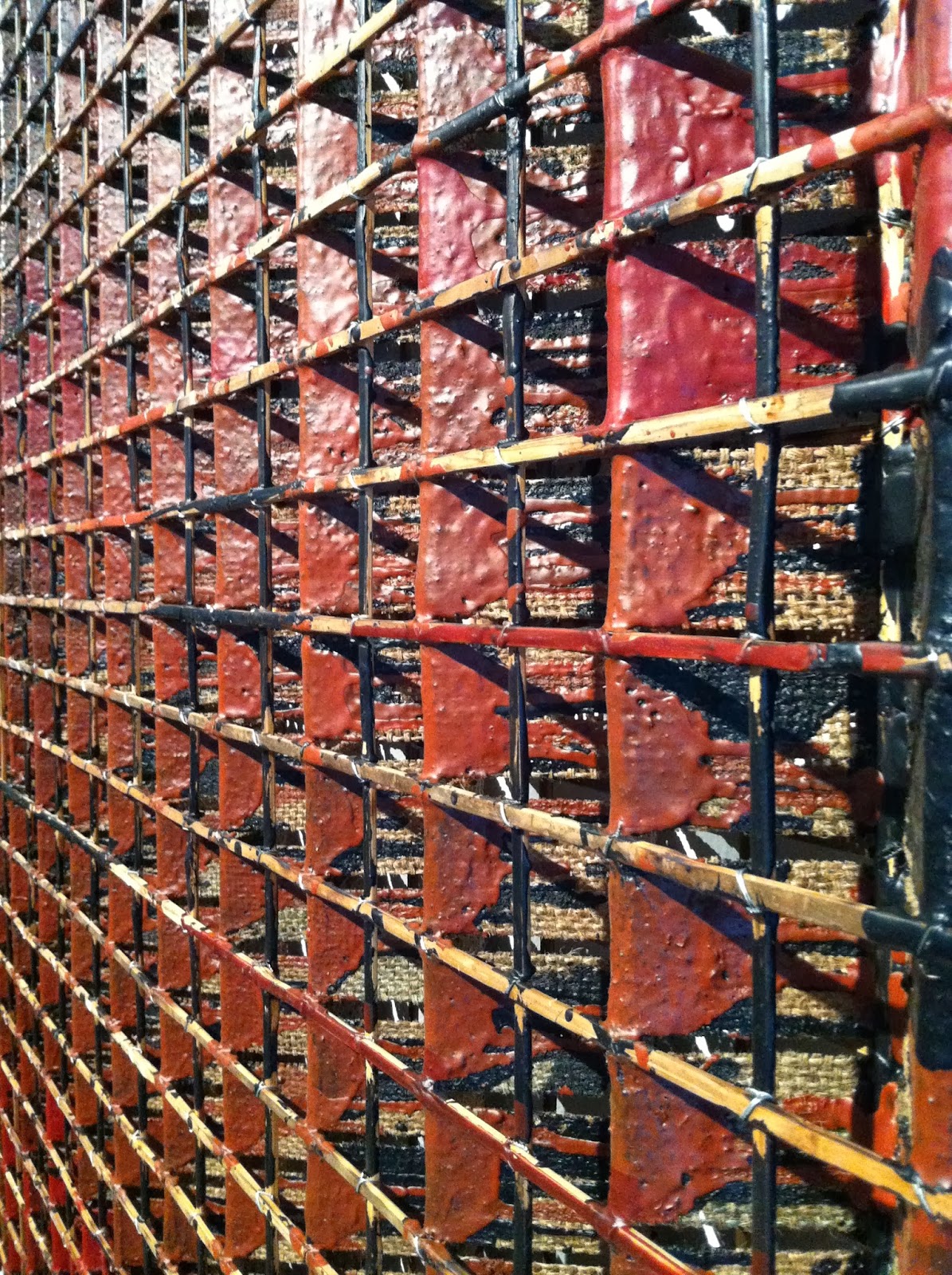
For 100 days, over 150 artists present a wide spectrum of contemporary art, paintings, photographs, sculptures, videos, performance art, etc, from 55 countries. It’s a spectacular event that turns much of this industrial town into (literally) a walking museum, and there are displays of art works and exhibits throughout the center of the city, including the Orangerie.

Documenta is not one of these art shows that focus on marketing and sales.  It’s not about finding “art work” to display in the new office building or that goes with your livingroom sofa. There are no glitz and glam, and most of the exhibits displayed are true reflections and interactions of the world around us.  It’s definitely art for art's sake.

For almost 60 years, it has remained true to intentions of the original curator Arnold Bode, discovering and celebrating modern art, which was banished and repressed during the cultural darkness of Nazism, and it continues to enlighten and enrich the world with its own unique voice.  There is also an extensive program of lectures, seminars, congresses, films, and poetry readings, as well as a writers’ residency and programs initiated by dOCUMENTA participants.
 

I have visited Kassel to see Documenta for the past 15 years, and every time, I leave with new knowledge and new perspective of the world.
Munich
  • Alte PinakothekClose to Munich's English Garden is a unique ensemble of three museums, each of them highlighting a different period in European art.  Start with the Alte Pinakothek, home to over 800 European masterpieces from the Middle Ages to the end of the Rococo. 
  • Galerie im Lenbachhaus und Kunstbau The Lenbachhaus is very close to Propyläen and Glyptothek at Königsplatz which are must sees on your Munich visit. So you might as well take a glimpse into what once was the homa of a famous portraitis of the late 19th century.  Also, there's a collection of paintings of the "Blauer Reiter" on display.  The Munich based "Blauer Reiter" ranges among the moste important art movements of the 20th century.  Among the artists is Kadinsky who is one of the founding fathers of abstract paintings and modern art. 
  • Haus der Kunst At the southern side of the "English Garden" (Englischer Garten).  The building with its row of Greek pillars in front of the facade was constructed in the year 1932, i.e. one year before Hitler and the Nazis took power in 1933.  The building became known when the nazis used it to show their exhibition "Entartete Kunst" which was the starting point of the persecution of intellectuals and artists in the "Third Reich".  Nowadays, there is a vernissage of an exhibition of very avantgardistic modern art.
  • Neue Pinakothek The Neue Pinakothek features art and sculpture from the late 18th to the beginning of the 20th century.  Highlights include German art of the 19th century with paintings from romanticist Caspar David Friedrich and the private art collection of King Ludwig I.  There is also a fantastic collection of French impressionists including Monet, Degas, and Renoir.
  • Pinakothek der Moderne The Pinakothek der Moderne, completed in 2002, is the largest museum for modern art in Germany.  The vast gallery complex unites four collections under its roof: The State Graphic Collection with more than 400,000 prints, drawings and works on paper; the State Museum for Applied Arts; the Museum of Architecture of the Technical University of Munich, the largest specialist collection of its kind in Germany; and the State Gallery of Modern Art which showcases stars such as Picasso, Magritte, Kandinsky, Francis Bacon, and Warhol.

Saturday, May 25, 2013

Going Home, Traveling to My “Hometowns”

Hometown … a word that evokes emotion in everyone.  And yet, when people often ask me about my “hometown”, I can’t quite pinpoint to where that is.

It’s because I consider every one of the places I’ve lived in the past four decades as my “hometown”, and I must admit, as I get older, I enjoy more the trips that gets me back to these cities, as traveling is no longer about discovering new places as much as going back to ones that I have fond memories of, seeing friends and family and sharing them with my son.  

So, without further ado, here are 8 cities I love that I’m proud to call my hometown: Seoul, Houston, NYC, Paris, Strasbourg, Frankfurt, Berlin, and San Francisco.

Seoul, South Korea

Seoul is FABULOUS!  Over the past three decades, I have witnessed not only my home town but also my homeland transform itself from the rubble of the Korean War to become an economic powerhouse not only in Asia but worldwide, and no city in South Korea epitomizes and reflects this transition like its capital, Seoul.  From the concrete jungles of the 80’s and 90’s to the softer-edged 21st century urban oasis that it has become since the new millennium, largely thanks to its visionary Mayor, Seoul is not only one of the most interesting and exciting cities in Asia but also the most tourist-friendly.

Seoul is a cosmopolitan city that equals, and in some respects, surpasses the likes of other megapolis in the world like New York City and Tokyo.  Everywhere you look, there’s a reflection of prosperity that has been built from sheer determination and dedication of its citizens.  From the upscale high-rises in Gangnam district to the chic boutiques in Apgujeong; or the rows galleries filled with fine art in Samcheongdong district to the regal omnipresence of Gyeongbokgung, Seoul is a sophisticated traveler’s dream come true.  

Great thing about Seoul is that, like NYC, another favorite city of mine, it’s ever-changing and ever-evolving, and every time I return to the city, I’m reminded that the best is yet to come.

For all my favorites & recommendations in Seoul, check out:

Houston, Texas (USA)

Everything is BIG in Texas!  And Houston is no exception; it's the biggest city of them all, and one of the biggest in the country (4th largest in the US).  Nevertheless, growing up in this cosmopolitan metropolis, I felt as if I was living in a small town, which isn’t necessarily a bad thing since no matter where you come from, Houston has a way of making you feel like you belong.  

Unbeknownst to most people, Houston is one of the most ethnically diverse places in the United States only to be matched by NYC and LA, and definitely one of the most diverse cities I’ve lived in.  It truly is a microcosm of people from all over the world, and this diverse group of immigrants have brought a wonderful mix of cultures and cuisines to Houston.

There’s no doubt that the city has a great restaurant scene, and even after traveling all over the world for two decades, some of my favorites are still in Houston.  One factor contributing to this is Houston's ethnic diversity, and Houston's proximity to Latin America and the Cajun areas of Louisiana.  The ethnic richness has become an essential hallmark of Houston restaurants, where cuisines from Vietnamese to Indian have become part of a common culinary vocabulary, right along with the vital strains of Mexican, smokehouse and cowboy cookery for which the state is more generally known.  And Houston is unique in Texas for the strong currents of Cajun, Creole and Deep Southern cuisine, not to mention, you can find the freshest variety of Gulf seafood as well.

Although people always assume that Texas is known for its football teams
… go Texans! … in Houston, you will also find a vibrant culture and art scene, with professional resident companies in ballet, opera, symphony and theater.  Also, the nearby Museum District stakes its claim as the country’s fourth largest, with 18 cultural powerhouses set within blocks of one another.
 
Houston serves up nationally recognized dining, shopping, entertainment and nightlife, as well as world-class attractions … also, a little organization called NASA.  Best of all, there are plenty of budget-friendly things to do, especially considering that one of my favorite museums in the world, de Menil Museum is free.  

Sadly, anything good that has been established in Texas, from NASA Space Center to the thriving art scene has been completely nullified by the debacle of the Bush era, as it seems that the only thing most people outside of Texas can associate it with is the idiosyncrasies of W’s administration.

During one of my first outing with some friends in California, I was asked where I was from, and when I said that I grew up in Houston, a wife of a friend snarkly replied, “I won’t hold that against you.”  Well, I hope she does because I’m proud to be from the great state of Texas.  Say what you will about it, but one thing is certain, Texas is never boring!

What to do:  

Where to eat:
  • Kim Son's - a great Vietnamese restaurant in a rather generic setting, but definitely worth the trip if you enjoy Vietnamese cuisine
  • Kiran's - believe it or not, a fantastically fresh sushi restaurant that happens to be a buffet!
  • Rajin Cajan - a great Cajan restaurant near the Galleria on Richmond, inside the 610 Loop ... you won't be able to miss this restaurant as it has a giant crawfish sitting on top of its roof
  • Sambuca – a great Sunday brunch place with live jazz
  • Vietopia – fabulous Vietnamese restaurant with great food and ambiance
My favorite neighborhoods:
  • Montrose – There are a lot of fun funky one of a kind shops and cafes.
  • West U near Rice Univ – residential but absolutely charming … like a little village; the shops & restaurants there tend to be bit more sterile but nevertheless a wonderful area for a drive or cycling (only recommended during winter months)
  • the Heights, especially 19th Street – without a doubt my fav area filled with antique shops, one of a kind stores, and great/fun restaurants & café … think Brooklyn Heights meet E. Village
  • Westheimer/Elgin near Montrose – a great selection of consignment, antique shops, and quaint cafes
  • Chinatown on Bellaire - if you're feeling adventurous, but there are great Chinese restaurants throughout Houston area ... one that I would recommend is "Fu's Garden" It's a chain restaurant; nonetheless, it is very tasty and well worth the search if you're near by.
NYC, New York (USA)

I absolutely fell in love with NY from the first moment I step foot in the city.

I was in my mid-teens, and my mother had visited a friend of hers in Queens, with whom we’d stayed for few days, and those were the most exciting few days of my teenage life. NY was the polar opposite of the middle class suburban environment in which I’d grown up. It was fast-paced, wonderfully diverse, full of energy and excitement, and most of all, REAL.

Human interactions and emotions are in your face and displayed in the open for anyone who care to observe them. People from all walks of life from all over world interact and sometimes clash as naturally as breathing air, and in the city of over 8 million, people move about as if they’re engaged in a dance, which only the natives of the city know.

Most of all, it’s a city that enables you to experience the world … or at least a great introduction to it … and gives you an opportunity to meet amazing people under the most extraordinary circumstances.  It’s a city that allows you to experience life that’s far more exciting than any story that Hollywood can put a spin on.

It has been just over a decade since I’d lived in New York City. Yet, once a New Yorker, you always feel like a New Yorker, as THE city has a way of seeping into every core of who you are.  It’s been great being able to return to the city with my family, especially our 5-year old son, who after last trip told me that he liked NYC so much that he wanted to live there … that’s my boy! It’s not hard to see why he loves it, as NYC has a way of captivating people of all ages, and the best part is that being with my husband and our son, we’re able to discover the side of NYC that I wasn’t able to as a single 20-something who worked like crazy all day and played all night.

As a family, we’ve been able to discover and enjoy the softer and more serene side of NYC, and have learned to enjoy that in the city that never sleeps, peace and tranquility is always just around the corner.

For all my favorites & recommendations in NYC, check out:

Paris, France

I was mesmerized by Paris from the first moment I’d arrived in Gare d'Austerlitz.  I was BLOWN AWAY by its beauty, and my life-long lover affair and addiction to Paris began.

Surprisingly, in spite of all the negative stereotypes and media coverages dubbing Parisians as being the rudest people in the world, my first encounter with them was absolutely wonderful. Even when I’d walked into a swanky but charming hotel in the Latin Quarter, Hotel de l'Universite and explained to the lady at the front desk that I needed the room for few nights but didn’t have any credit card or money to secure the reservation as my wallet was stolen, she just looked at me kindly and gave me a key to a room. Looking back, I can’t believe I’d experienced such kindness in Paris … and I never have since that first trip.

The entire stay in city of light was absolutely magical and enchanting! Seeing the Monet’s ‘Water Lilies’ in Musée de l'Orangerie, sitting underneath the Eiffel Tower, walking along the Champs-Élysées, and seeing the great masterpieces in Musée D’Orsay. I could have sat in Jardin de Luxembourg all day … and I think I did.

Then, as I was watching the sunset over Paris from the top of Montmartre outside the Sacre Coeur, the city twinkling with lights as the night fell, I knew I had to come back soon. And I did several times, before eventually moving to Paris in the summer of ’97.

During my first trip, as I was strolling through beautiful streets of Paris, I’d wondered whether the Parisians were aware of all the beauty that surrounded them. I found out that they did, and indeed it was a dream come true to be able to live there and wake up to it every morning!

However, I had to wait 3 more years before moving to Paris, and as my trip came to an end, I was terribly saddened by the thought of leaving. I remember I’d actually postponed my train ride back to arrive in Gatwick literally minutes before my flight, and as the train passed the Eiffel tower, I felt as if I was parting from or leaving a good friend. Then again, I always had a propensity to fall in love with a city, and Paris would be the first of my many loves.

For all my favorites & recommendations in Paris, check out:

As a self-proclaimed Francophile, I wanted to visit France since I could remember. From the moment I was introduced to the French language in middle school, I was enamored by the lovely sound of every syllable, and I couldn’t wait for the day when I could visit the country where everyone spoke French.

Then, after my whirlwind trip to Europe, I couldn’t stop thinking about Paris. Although I was there for only few days, I knew with an absolutely certainty that I wanted to live there. I saw myself waking up in the city of light everyday, walking along the Seine, sipping coffee in Jardin du Luxembourg while soaking up the sun or being drenched in the rain, and of course, speaking French.

I was living in New York City at the time, which in its own right is a phenomenal city ... a Parisian friend of mine once told me, “NY is the city that Parisians dream of living.” … but after a torrid relationship with a beau and a career that was eating me alive, so much so that my doctor actually warned me that if I wanted to live to see my 30th birthday, I needed to slow down, I decided it was a time for a MAJOR change.

So, I enrolled myself in first available class at Alliance Française in Paris and signed up for 3 months of classes. I thought I would try it out for the summer, and if Paris lived up to my expectation, I would find a way to stay there permanently.

I subleased my apartment on the Upper East Side, put my stuff in storage, and headed out to JFK with 2 suitcases, like the way I’d arrived in NYC only few years before. The school had provided me with housing at a dormitory in one of the universities, and I had a close friend in the city as well as my boyfriend (who is now my husband) across the border in Germany. I thought I was set … boy, was I wrong!

Life in Paris was quite the contrast from what I’d experienced as a tourist, and I never fathomed the difficulties I had encountered. Although I was able to converse at a basic level, it wasn’t just the language barrier that posed a challenge. And it wasn’t as if I had come from Greebow, Alabama. I was used to living in a cosmopolitan city ... a tough city where the mantra is, “If you can make it there, you can make it anywhere.” Well, I guess good ole Frankie never lived in Paris because nothing prepared me for the challenge.

However, after talking to other expats and reading quite a few literature about their lives in Paris, I realized that what I was experiencing was quite common among the expat community. Even for many tourists, the reality of Paris doesn’t always live up to its romantic image and expectations, and some even require psychological treatment following a visit to Paris. It’s called “the Paris Syndrome”, and it is a known psychiatric disorder that tourists suffer after visiting Paris as a result of dashed hopes and shattered dreams when faced with the reality of France’s capital city.

Granted I didn’t suffer a mental breakdown, but when I read the book, “A Year in the Merde” (which literally translates to A Year in Shit) by Stephen Clarke, it clarified everything that I was feeling, the frustration of dealing with endless bureaucracy, the overwhelming negativity of the people around me , the hopelessness of a society that still (covertly) upholds its class system, and oh-la-la, the MERDE ... literally everywhere.

Of course, there were plenty of times when I was in awe of the city … my god, to be in Paris! I had what I called “movie moments” every time I walked outside my dorm, and for the most part, I enjoyed my life in Paris. However, I knew after the summer was over, it was time for me to move on.

The question was whether I would stay in France and pursue my studies or to return to New York. Although I was disappointed by the experience in Paris, I still really enjoyed being and traveling in France. I’d only been to few cities outside of Paris, but I knew I wanted to discover and see more.  Also, I definitely wanted to go to a city where I could fully immerse myself in learning and speaking French, and wouldn’t have the safety net of reverting to English.

I’d found out about a new language school, CIEL that offered full immersion classes in Strasbourg, a city that was close to Germany (actually on the French-German border) in Alsace. I’d also contemplated on several cities in Provence and in Côte d'Azur, but given that Strasbourg was only 2 hours away from Frankfurt where my boyfriend lived, the choice was a no-brainer.

Moving to Strasbourg turned out to be one of the best decisions I’d made in life, as well as one of the most wonderful experiences I ever had. Aside from being one of the most breathtakingly beautiful cities in France, and in Europe, Strasbourg was also diverse, dynamic and vibrant.

Words can’t express how I’d felt on the first day after my introductory class, when I took a walk into the historic center, the Grande Île (Grand Island), which is classified a World Heritage site by UNESCO. It was like walking into a fairytale book, with black and white timber-framed buildings accented by colorful flower boxes, and charming little cafes, restaurants and shops everywhere. I was mesmerized and enchanted!

Also, on the contrast to Parisians, people I’d encountered in Strasbourg were friendly, courteous, and generous, which I’d found most French to be. The interactions with the locals were so completely different from the encounters I had with (most) Parisians, and it was also wonderful to meet a diverse group of students from all over the world.

It was truly an amazing experience to live in such an idyllic city, immersing myself in learning a foreign language that I’d always loved, and experiencing a totally different culture. It was everything I’d dreamed of, and one of the best and the most memorable experiences I’ve had in my life.


My favorites in Strasbourg:
  • Hotel Gutenberg – a lovely and charming hotel in the heart of the city
  • the wonderful outdoor markets, especially the antique book market on Saturdays
  • the Christmas market – will take your breath away
  • l’Orangerie – a lovely park near the European Parliament building
  • Flam's – a wonderfully inexpensive restaurant that serves up all sorts of tasty tarte flambé
At first glance, Frankfurt looked like an ordinary American city, the skyline, the slew of modern buildings, and even the wide Autobahn (highway) that’s spread out throughout the city. Then, as I traveled and saw other cities in Germany, I learned that much of the country looks quite similar, and the layout of the major cities like, Frankfurt, Hamburg, Darmstadt, etc, are almost identical. This is because as so much of Germany was heavily bombed and destroyed during WWII, a lot of the reconstruction and rebuilding was done hastily during the same period. Therefore, with the exception of smaller villages, which were considered insignificant to the Allied Forces, and Munich, which surprisingly was able to maintain most of its structure, the rest of Germany was in ruins after the war.

However, Frankfurt is unique in a way that it has something that only few cities in Europe has, diversity, and it's the only city in Germany where I can see the presence of people from all over the world … not including tourists.

Being the headquarters of the European Central Bank and some of the largest banks and financial services, Frankfurt is a hub for international expat community. Also, for centuries, the city has been a gateway for various migrants groups, attracting immigrant from all over the world. Also, known as “Little Istanbul”, Frankfurt is home to one of the largest Turkish immigrant population not only in Germany but also in Europe.

Once I’d learned to look past Frankfurt’s austere appearance, I began to appreciate the city for all the comforts it provided me as an expat, a foreigner, an ethnic minority, and more importantly, as a person of color.

I appreciated that there was a variety of ethnic restaurants in Frankfurt, especially wonderful Korean restaurants. I loved that there was a sushi bar on my street, even if they served only two types of fishes. I also loved the Turkish Imbisses, the American burger joint, which oddly enough is called the Kangaroo Bar, the wannabe Mexican hotspot, and most of all, the fantastic tapas restaurant around the corner.

However, it wasn’t just about being a foodie that made me appreciate Frankfurt.  It was that I was able to see people of all ethnicity in these restaurants and throughout the city.

Most often, when I was traveling in Germany, especially in the cities and villages in the eastern and southern regions like Bavaria, I felt as if I was the only foreigner or a person of color in the entire city … and I probably was.

I began to realize the importance living in a diverse environment, being around people from different countries and cultures, and seeing other people of color. This is something that I took for granted while living in the US, especially in ethnically and culturally diverse cities like NYC and Houston. I was always surrounded by an array of different ethnic groups. Sadly, in Europe, ethnic diversity is not something that can be found easily. There are only handful of cities that are culturally and ethnically diverse, and Frankfurt is one of them.

So, in a way, I was glad that I was living in a city that reminded me of America and the multicultural environment I was accustomed to, and although I can't say that Frankfurt is as fascinating, beautiful or interesting as NYC or Paris, I love its ethnic and cultural diversity, and best of all, the people I have met and gotten know in Frankfurt.

For all my favorites & recommendations in Frankfurt, check out:

I was blown away by Berlin from the first time I was there in 1997.  It was less than a decade after the Wall had come down, and the remnants of the Communist era was visible everywhere.  

Berlin was like no place I’d ever been, especially in Europe.  Unlike Paris, Brussels and Madrid, it was modern, edgy and raw.  The entire city was like one giant construction site, and there were no certainty as to what the future will bring.

Since then, Berlin has evolved into a scene-stealing combo of glamour and grit.  Teeming with not only top museums and galleries but also cutting-edge architecture, entertainment, nightlife and shopping, a global influx of creativity has turned the German capital into a cauldron of cultural cool reminiscent of New York in the’80s.

I’d always felt as if I’d been born a decade too late and have missed out on all cultural revolution and evolutions of the 70’s and 80’s, and being in Berlin was my chance to experience it all.  

So, I jumped at the chance to start an international Master’s program at a university in Biesdorf, an eastern suburb of Berlin.  Aside from the preparation of getting into the German academic system and acclimating myself into the culture, which turned out to be relatively complex, life in Berlin was exacted what I’d imagined.

Overnight, I was thrown into la vie de bohème (the bohemian life).  As an international program that was designed to attract and cater to international crowd, I was able to meet and get to know students from all over the world.  It was an eye-opening experience to share our history and background, and to gain a perspective of lives that were so different than mine.

I would sit in smoke-filled cafes for hours with my classmates talking about societal and political issues like genocides, civil war, nationalism, but more importantly, the issues that concerned most of us like racism.

Unfortunately, these discussions seemed applicable and relevant even today, as Berlin is and has always been a politically hotspot.  Even before the rise of Third Reich, many important political battles were fought here.  The division of the city after World War II intensified the tension between competing political systems, as well as between capitalism and communism.

And no city in the world embodies the paradox of political ideologies more than Berlin.  It is unique in a way that throughout the 20th century it has attracted counterculture more than any other place in the world.  You can find everything from world-class museums to underground graffiti art, grand operas to guerrilla clubs, gourmet temples to snack shacks, and whether you prefer posh or punk, you can find it in Berlin.
 
Nowadays, people look to Berlin for the latest trends in lifestyle, music and art.  Inspired by this outpouring of creativity, growing numbers of artists are arriving in the city from around the world, making it one of Europe's most exciting destinations.

Long gone are the days of when I could sit in a café, order a tall glass of beer for 2 Euros and have an afternoon-long conversation.  In the past 5 years, most of my favorite neighborhoods and places in Prenzlauerberg and Kreuzberg have become trendy hotspots that caters the chic and the in crowd.  However, I will always remember fondly the time I’d lived there, and look forward to going back every summer with my little boy not only to share all the wonderful memories I’ve had but also to witness the continued evolution of Berlin.  
 
For all my favorites & recommendations in Berlin, check out:

San Francisco, California (USA)

The saying goes, “I left my heart in San Francisco”, and my heart definitely belongs here.

Even after living in so many wonderful cities, I must say, San Francisco never seizes to amaze me.  It is one of the most beautiful cities I’ve seen, and I could spend all day strolling or driving in this city, as even running an errand or a
simple drive can turn into a postcard moment.
 
However, my favorite thing about San Francisco is the diversity, in culture, people, cuisine and lifestyle, and without a doubt, it is one of the most diverse cities I’ve lived in. I also love the unpredictability of the place, as anything goes, and the “typical” everyday scenery on the street is anything BUT.

Within a relatively compact 40 square miles one can find the grandest Victorian mansions next to elegant Art Deco skyscrapers; the sprawling, verdant oasis of Golden Gate Park, along with some shockingly good museums; and funky boho bastions filled with independent bookstores and galleries, and
indie-designer shops along side high-end retailers. And the best thing is that no matter where you go or how upscale the restaurants and shops may be, most people are dressed in jeans (or better yet, shorts) and flip flops. 

San Francisco is a city that offers all the conveniences of a big city, like public transit, progressive art scene, world class restaurants, and of course the multi-ethnic community, with very little inconvenience.

Most importantly, although San Francisco is a great city for people of all ages, it’s especially a wonderful place for children. Mainly because throughout the years, San Francisco has managed to hold on to its small town atmosphere, and unlike other larger cities, there are relatively few tall buildings and vast number of recreation areas and parks.

There are tons of fun activities and things to do with children, so much so that if you spent a month in San Francisco, there are enough activities to fill up each day with different things. It's a place where you can linger for hours in a quaint neighborhood cafe surrounded by breathtaking views, kick back on one of the many picturesque parks, or hangout in a children’s museum which happens to have the best view of the city, and unlike many metropolises where children are treated like nuisance, in San Francisco, almost every activity, restaurants and even cafes are catered to the needs of families; hence, they’re oriented to make children feel as comfortable as the adults.
 
It has been an absolutely joy to live in this city for the past 6 years with my family, and we definitely look forward to exploring and discovering more of it!

For all my favorites & recommendations in San Francisco, check out:


Wednesday, July 4, 2012

I ♥ Frankfurt.

I never thought about living in Frankfurt … or anywhere in Germany for that matter. I’ve always been a Francophile and someone who appreciated and enjoyed the Latin culture, and Germany was so … well, German. Nevertheless, when my job transferred me to Frankfurt, I thought, “Oh well … at least, it’s in Europe.”

At first glance, Frankfurt looked like an ordinary American city, the skyline, the slew of modern buildings, and even the wide Autobahn (highway) that’s spread out throughout the city. Then, as I traveled and saw other cities in Germany, I learned that much of the country looks quite similar, and the layout of the major cities like, Frankfurt, Hamburg, Darmstadt, etc, are almost identical. This is because as so much of Germany was heavily bombed and destroyed during WWII, a lot of the reconstruction and rebuilding was done hastily during the same period. Therefore, with the exception of smaller villages, which were considered insignificant to the Allied Forces, and Munich, which surprisingly was able to maintain most of its structure, the rest of Germany was in ruins after the war.

However, Frankfurt is unique in a way that it has something that only few cities in Europe has, diversity, and it's the only city in Germany where I can see the presence of people from all over the world … not including tourists.

Being the headquarters of the European Central Bank and some of the largest banks and financial services, Frankfurt is a hub for international expat community. Also, for centuries, the city has been a gateway for various migrants groups, attracting immigrant from all over the world. Also, known as “Little Istanbul”, Frankfurt is home to one of the largest Turkish immigrant population not only in Germany but also in Europe.

Once I’d learned to look past Frankfurt’s austere appearance, I began to appreciate the city for all the comforts it provided me as an expat, a foreigner, an ethnic minority, and more importantly, as a person of color.

I appreciated that there was a variety of ethnic restaurants in Frankfurt, especially wonderful Korean restaurants. I loved that there was a sushi bar on my street, even if they served only two types of fishes. I also loved the Turkish Imbisses, the American burger joint, which oddly enough is called the Kangaroo Bar, the wannabe Mexican hotspot, and most of all, the fantastic tapas restaurant around the corner.

However, it wasn’t just about being a foodie that made me appreciate Frankfurt.  It was that I was able to see people of all ethnicity in these restaurants and throughout the city.

Most often, when I was traveling in Germany, especially in the cities and villages in the eastern and southern regions like Bavaria, I felt as if I was the only foreigner or a person of color in the entire city … and I probably was.

I began to realize the importance living in a diverse environment, being around people from different countries and cultures, and seeing other people of color. This is something that I took for granted while living in the US, especially in ethnically and culturally diverse cities like NYC and Houston. I was always surrounded by an array of different ethnic groups. Sadly, in Europe, ethnic diversity is not something that can be found easily. There are only handful of cities that are culturally and ethnically diverse, and Frankfurt is one of them.

So, in a way, I was glad that I was living in a city that reminded me of America and the multicultural environment I was accustomed to, and although I can't say that Frankfurt is as fascinating, beautiful or interesting as NYC or Paris, I love its ethnic and cultural diversity, and best of all, the people I have met and gotten know in Frankfurt.
My recommendations in Frankfurt.
Aside from all of the tourist sights listed in guidebooks and brochures, to see the fun side of Frankfurt and experience the local culture, you must visit 3 neighborhoods: Sachsenhausen, Bornheim, and my old hood, Bockenheim.

Sachsenhausen covers a rather big area to the south of Main River. Some of Frankfurt’s finest museums are located along the river, called Museumsufer. Also, the neighborhood is known for its cider and its old, half-timbered houses. Especially on the elegant Schweizerstrasse, you can find most of the traditional German bars and restaurants, and the area around Schweizer Platz is a rather pleasant neighborhood with a lot of old houses and restaurants offering a wide variety cuisine. Finally, the area around Südbahnhof is great for those seeking Apple Wine bars (Frankfurt's infamously favorite drink) and clubs.

To the north of the city center is Borheim, a quiet residential neighborhood that feels more like a little village. However, the great thing about Bornheim is that it spans the divide between the traditional and the trendy, as it offers everything from the old-world cider pubs and spanking-new bars, to exclusive boutiques and simple corner shops attract a mixed clientele. At the heart of this residential area is Bergerstrasse, a great place for strolling and shopping.

Then, there is my favorite area in Frankfurt, Bockenheim … and I’m completely biased as this was my old neighborhood. Home to Frankfurt's Johann Wolfgang Goethe University, Bockenheim is vibrant and lively. The cafés, bistros, pubs and shops near the university and near Leipzigerstrasse are filled with students and locals from all over the world, and you can find a great selection of ethnic restaurants as well as little Kneipe that serve local specialties. Not surprisingly, most of my favorite restaurants are in or near Bockenheim.
Museums:
Restaurants:
  • Andalucia, Konrad-Broßwitzstr. 41 – serves great tapas and grilled seafood
  • Ban Thai, Leipziger Str. 26 - As the name should indicate, this is a Thai restaurant with not only great food but also a nice atmosphere and excellent service.
  • Bistro Sahin, Markgrafenstr. 1 – hands down the best Turkish Imbiss in Frankfurt. Also, the atmosphere of the restaurant is quaint and has a lovely outdoor seating area facing a beautiful church and a market place.
  • Cafe Extrablatt, Bockenheimer Landstr. 141 – the food is nothing to write home about but the ambiance, especially the outdoor seating, next to the university is great, especially for people watching
  • Cafe Hauptwache, An der Hauptwache 15 – a nice place to stop for lunch, afternoon snacks or drinks
  • Goethe Haus Café – an absolutely charming little café attached to Goethe Haus, an ideal stop for mid-day snacks
  • Leonhards restaurant - favorite tourist spot as it offers Frankfurt's most panoramic views, but it also has a good selection of lunch/dinner items and an excellent dessert selection, which makes it an ideal stop for afternoon Kaffee und Kuchen.
  • Le Crobag - Don't let the chain-restaurant appearance fool you, this place has some of the tastiest pastries and sandwiches. The location at the Hauptbahnhof is especially convenient for picking up tasty snacks before heading out of town.
  • Orfeo's Erben, Hamburger Allee 45 – technically a theater, but it has a wonderful restaurant/bar attached to it
* WiFi in Germany is called WLAN (pronounced "vey-laan"). There are quite a few cafes that offer complimentary Wifi. However, you will need a passcode; so, ask the wait staff, and it will be written down for you in a very "Mission Impossible" manner.

Being a major hub in Germany, there is a wide selection of hotels in Frankfurt, ranging from extremely modest to luxurious, and I have stayed in a handful of them. However, the only hotel I can/will recommend is Hotel Adina, as it is without a doubt one of my favorite hotels I’ve stayed not only in Frankfurt but also worldwide.

Special Events & Festivals:
  • Nacht der Museen  – An evening of museum hopping, live music and festive outdoor gatherings all over Frankfurt, the night provides an easy way to get a glimpse of the city's cultural offerings in one go.
  • Ufer Fest – Usually takes place in mid-August, this is one of Germany's' premiere festivals.  Unlike the rowdy Oktoberfest in Munich, the Ufer Fest is focused more on celebrating art. The whole riverbank on both sides of the Main, are filled with about 600 stands selling art, crafts, food and drink, and with about 20 stages providing music of all sorts. All you need is to buy a 4 euro button and you can visit 18 different museums the entire weekend long.
  • Weinachtsmarkt (the Christmas market) - a long held tradition in Germany, it is a wonderful event that should not be missed

Fun things to do with children in Frankfurt:
When my husband and I decided to take out little boy to Frankfurt, my first concern was whether we would be able to find fun activities that are appropriate for children. Unfortunately, aside from the postings on travel forums, there isn’t a lot of information on this subject … then again, it’s difficult to find information on things to do with children anywhere in Europe as if the children are merely bystanders of adult travelers. To my surprise, once we arrived in Frankfurt, we found plenty of fun things to do for my little boy … so much so that we got around to only half of them. Well, we look forward to visiting and seeing the rest next time we’re in Frankfurt.
  • Senckenberg Museum – By all means, this isn’t the American Museum of Natural History in NYC; however, it is one of the largest museums dedicated to natural history in Germany, and it was big enough to entertain our 4 year old. The museum showcases more than 400,000 exhibits, ranging from fossil amphibians, and American mammoths, to Egyptian mummies, but my boys favorite was the dinosaur exhibit, esp. the Tyrannosaurus Rex.
  • Palmengarten – This isn’t just your average Botanical Garden, and there is a lot more here than meets the eye. Aside from being the most perfect and safe place to let kids just run around, Palmengarten has 2 large play space, a waterpark and a playground dedicated to small children. There’s no better place to spend a beautiful summer day, and be sure to bring a towel and change of clothes.
  • Rebstockbad – Indoor swimming pools in Germany are like visiting a small waterpark in the US, at 1/3 of the cost. It’s a perfect place for children of all ages, as it has 2 very big (fun) slides, a wave pool and even a kiddie sauna and whirlpool. There’s also an outdoor pool, which makes it a great place for all seasons/weather.
  • Apple Cider Express – What a fun way to discover and see Frankfurt, as this historic tram that takes you through the heart of Frankfurt and connects popular sights like the historic Romerberg Square, Paulskirche, the Museum of Modern Art and the Frankfurt Zoo. While listening to some local Hessian music, the grown-ups can enjoy a glass of "Ebbelwei" apple cider, the signature drink of Frankfurt, while kids nibble on some pretzels. (only on weekends)
  • MyZeil – This latest architectural highlight in Frankfurt is a futuristic shopping complex (mall) called MyZeil. It is one of the most significant inner city development projects in Europe, designed by Roman architect Massimiliano Fuksas, with an eye-popping glass façade along the Zeil in the shape of a vortex, and the interior is even more spectacular with irregularly shaped ramps and glass columns. It’s definitely a welcome addition to the placid landscape of Frankfurt’s pedestrian zone and city center, and I was told that there is a nice kids area as well; however, we’ll have to check it out next time.
  • Frankfurt Zoo – It offers a wide scope of programs throughout the year, including festivals for the entire family, exciting presentations, exhibits and themed tours.
  • Toy stores – Toy stores in Germany are extensive, and almost every one of them we’ve come across functions as a play space for children.